How to Choose the Right Club Management Software for Your Private Club?
Why Your Next Software Upgrade Must Be Cloud-Native?
Picture a General Manager sitting alone in the back office at 8:00 PM, staring at a loading bar that hasn’t moved in ten minutes because the dining room system is trying—and failing—to speak to the accounting server. It’s a familiar nightmare. For too long, private clubs have been held hostage by what we call the "Frankenstein" problem. You have one ancient program for the tee sheet, a totally different one for the kitchen, and a third for the monthly billing, all stitched together with digital duct tape and hopeful prayers that the data doesn't crash overnight. But the cracks are showing.
While your staff wrestles with these clunky, gray windows on a desktop computer, your newest members are sitting in their cars, tapping their iPhones, expecting the same smooth magic they get from Uber or Amazon. They don't care about your server room or your nightly batch updates. They just want it to work. The decision to upgrade your club management software is no longer just about keeping the books balanced; it is about survival in an era where convenience is the only currency that matters. The era of the dusty server closet is over, and the future belongs to the cloud.
Cloud-Native vs. "Fake Cloud"
Marketing teams love the word "cloud." They plaster it on brochures and splash it across websites because it sounds modern, airy, and fast. But in the private club industry, there is a massive, expensive difference between "Cloud-Native" software and what we call "Hosted Legacy." Think of it this way.
If you have to click a special icon on your desktop, wait for a loading wheel, and then squint at a blurry version of Windows popping up inside your screen, you aren't really in the cloud. You are just renting space on a server in someone else’s basement. This is "Hosted Legacy." It is the same old clunky software from 2005, just moved to a different location so you can access it remotely via a slow, glitchy VPN connection. True cloud software is different.
It lives in the web browser, just like Gmail or Netflix. There is nothing to install, no remote desktop to configure, and no lag time while a signal bounces halfway across the country and back. It just loads.
This distinction matters because of the "Server Room Tax." When you buy legacy systems, you aren't just paying for the software license; you are signing up for years of IT consultant bills, hardware replacements, and the constant, nagging fear that a bad thunderstorm could fry your member database.
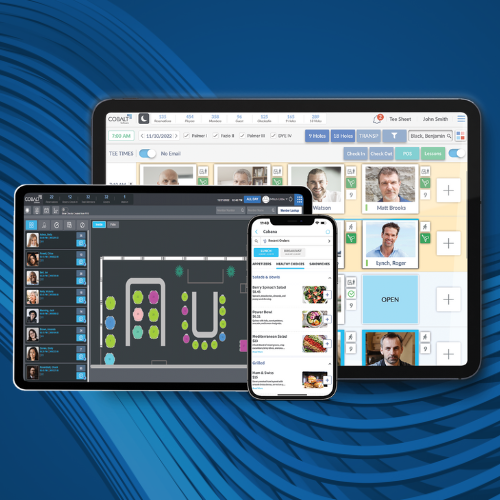
Modern platforms like Cobalt eliminate this room entirely. The servers vanish. The hum stops. That expensive, climate-controlled IT closet can finally be used to store wine or golf bags.
Then there is the freedom of hardware. Old systems are picky eaters. They often demand that you buy expensive, proprietary terminals that look like gray bricks and sit heavily on your counters. Cloud-native platforms don't care what you use.
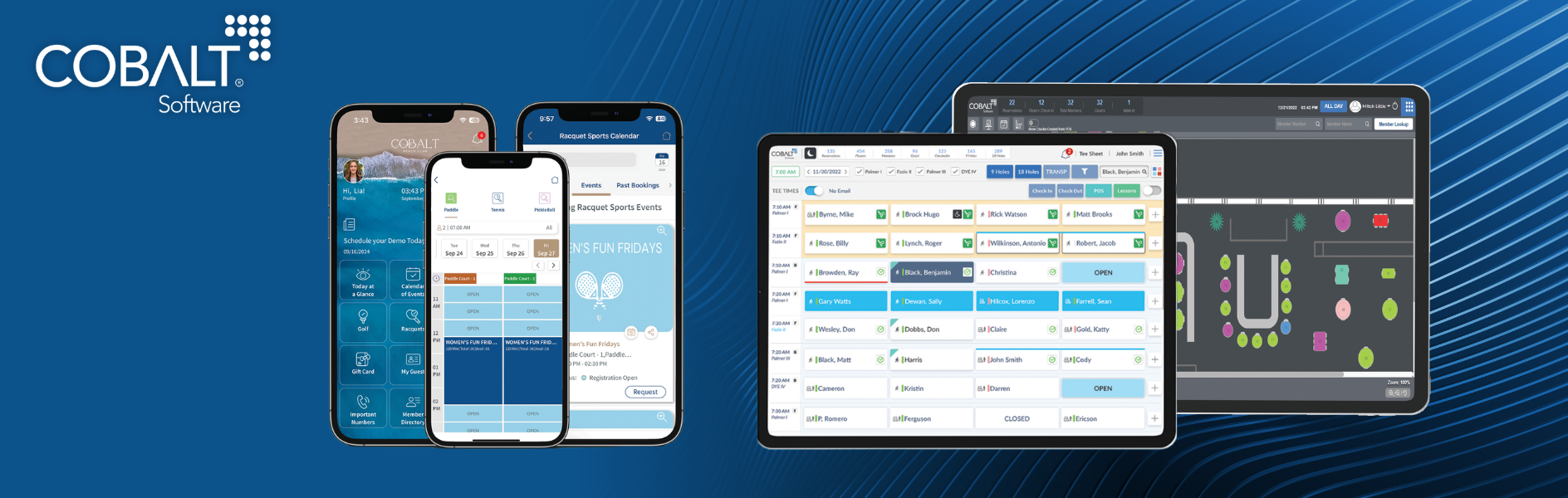
Do you want to check the daily revenue from an iPad while sitting on a beach in Hawaii? Go ahead. Does your Pro Shop want to run the register on a sleek Microsoft Surface or a standard Google Chrome browser? No problem. You stop buying overpriced, specialized junk and start using the same tablets your staff already knows how to use at home.
Finally, look at how the system grows. In the old days, an update was a scary event. You had to pay a technician to come in on a Sunday, shut down the entire club's network, and install "Version 12.0" while praying that the accounting data didn't disappear. That model is dead.
True software-as-a-service (SaaS) evolves while you sleep. You wake up, log in with your coffee, and find a new feature waiting for you. It happens automatically, usually for free, and without a single second of downtime.
Picking the right Club Management Software
When you start looking at how to choose club management software, your first question shouldn't be about the colors of the app. It should be about the integrity of the database.
The backbone of any private club is the General Ledger, and if your software treats accounting as an afterthought, you are building your house on sand.
Accounting for the Accounts
In the past, the finance office was an island. The golf shop had one system, the kitchen had another, and the poor Controller was stuck in the middle, frantically exporting CSV files and manually typing numbers into QuickBooks to make sense of it all. This is dangerous. It creates gaps where money can disappear and errors can hide.
A modern system like Cobalt changes the game by creating a "Single Source of Truth."
There are no exports. There are no nightly syncs. The membership roster, the point-of-sale, and the accounting ledger all live in the exact same brain.
This speed changes how you manage money. Instead of waiting for the "night audit" to run, a modern Controller can see the exact moment a member buys a bottle of wine at the pool and watch that revenue hit the General Ledger instantly. It is real-time financial clarity. If a number looks wrong on the budget, you don't have to go digging through file cabinets in the basement. You just click. You can drill down from a line item on a digital report all the way to the scanned image of the original vendor invoice without ever leaving your chair. Then there is the membership data itself.
Old systems treat members like static entries in a digital phone book. A name, a number, and a monthly bill. But a modern platform understands that a member is a living lifecycle. You need a system that tracks the entire journey, starting from the moment a person is just a curious prospect visiting for a wedding. It tracks their conversion to a full golf member, manages their dependents, updates their vehicle information for the gate guards, and even handles their resignation when their time at the club comes to a close.
When you finally figure out how to choose the right club management software to fit your long-term goals, you realize that automated dues billing and effortless receivables aren't luxuries. They are the baseline requirements for keeping your cash flow healthy and your staff sane.
Operations & Amenities
When a system is intuitive, like an iPad app, a new hire can figure it out in an hour. When it involves complex command lines and hidden menus, training takes weeks, and mistakes happen constantly.
Look at the people running your floor. Most of your waitstaff, bag room attendants, and pro shop assistants are in their early twenties, which means they have never lived in a world without a smartphone in their pocket. If you force them to use software that looks like it was built when Friends was still on TV, you are going to have a problem.
Training becomes a nightmare. This friction kills efficiency, especially in the pro shop.
For decades, the "tee sheet" was just a digital piece of paper. But the modern club is busier and more complex. You need a system that handles more than just a simple booking. You need fair, automated lotteries to manage the Saturday morning rush so that the same four guys don't monopolize the best times every week. And it isn’t just about golf anymore. The explosion of pickleball, tennis, and indoor simulators means your software must be a "Resource Scheduler," capable of booking a massage therapist just as easily as a tee time. Moving on to the dining room.
In the old days, the Point of Sale (POS) terminal was an anchor. It was a heavy, stationary machine stuck against a wall, forcing servers to memorize orders, walk across the room, and fight for a turn to punch them in. That walk is a waste of time. Modern operations cut the cord.
With cloud-native tools, the server carries the POS in their hand right to the table. They fire the order to the kitchen before they even step away from the guest. And speaking of the kitchen, the days of the noisy, jamming paper printer are numbered. Smart clubs are switching to Kitchen Display Systems (KDS), where orders pop up on a crisp screen, color-coded and routed instantly to the right station. It is quieter, faster, and it stops orders from getting lost on the floor. The beauty of a unified system like Cobalt is the flow.
Ideally, a member plays a round of golf, grabs a burger at the turn, buys a sleeve of balls, and books a lesson. In a "Frankenstein" system, that member might have to swipe a credit card three different times or sign three different pieces of paper. In a unified system, it all lands on one clean statement, automatically. The friction disappears.
The Member Experience
While the back office handles the heavy lifting of accounting and inventory, the mobile experience is the only part of the software that ninety percent of your actual members will ever see, touch, or judge. If that experience is frustrating, it doesn't matter how clean your General Ledger is. The member will be unhappy.
The member app is the new front door to your club.
For years, clubs settled for "responsive websites." You have seen them. You try to book a tee time on your phone, but you have to pinch and zoom to read the text, or you have to log in every single time you open the browser. This is not enough anymore.
To truly engage a modern membership, you need a native app. This means software that lives on the phone, uses FaceID for instant access, and stores data offline so it doesn't crash when the cell signal dips on the back nine. Some providers try to cheat. They give you what we call a "web wrapper," which is just a mobile website dressed up to look like an app. It feels clunky, it moves slowly, and your members will notice the difference immediately. True luxury today is self-service.
It sounds contradictory, doesn't it? We used to think luxury meant picking up the phone and having a human do everything for you. But consider the member who wakes up at 11:00 PM and realizes they forgot to make a dinner reservation for tomorrow. They don't want to call the front desk and leave a voicemail. They want to open an app, tap a button, lock in their table, and go back to sleep. The same logic applies to the boring stuff.
Paying the monthly bill used to be a chore involving paper checks and stamps. With a unified platform like Cobalt, a member can view their statement, see exactly what they ordered for lunch last Tuesday, and pay the balance with a single tap. It removes the friction from the relationship. Then there is the power of proactive communication.
Email is dying. Open rates are dropping because people are drowning in spam. If you need to tell the membership that there is a frost delay on the course or that the pool is closing early for a storm, an email is useless if nobody sees it until noon. A native app lets you send Push Notifications that land right on the home screen. It is instant.
When to Stick with Legacy?
To be fair, we have to admit that no single piece of software is perfect for every single operation.
There are specific times when sticking with a heavy, legacy provider is actually the smarter move. If your property functions more like a massive hotel than a private club, with hundreds of guest rooms and a need to sync prices with travel websites like Expedia, you might need the sheer weight of an old-school giant. Cloud-native platforms like Cobalt are built for members. They are designed for people who come back every week, not for random tourists booking a one-night stay from a travel blog. But here is the verdict.
Most private clubs are not international resorts. They are communities. For the ninety-five percent of clubs that focus on golf, yachting, or social events, the agility of the cloud far outweighs the need for heavy, industrial hotel features.
Conclusion & The "Future-Proof" Checklist
Changing your club’s software is never an easy task. It is expensive, disruptive, and exhausting. But if you count the cost of staff burnout and the silent attrition of members who are tired of clunky interfaces, the price of staying still is far worse. You cannot afford to let fear keep your club anchored to the past while the rest of the world moves to the cloud.
Before you sign a contract with any provider, you need to be sure they are actually selling you the future. Don't let a salesperson dazzle you with a few nice screenshots. Dig deeper. Ask the hard questions that separate the true cloud platforms from the imposters. Here is the checklist you need to bring to your next board meeting.
The Future-Proof Club Software Checklist
1. Is it Browser-Agnostic?
Can I run the entire Point of Sale on a standard iPad or Microsoft Surface without installing a remote desktop app? If the answer is no, you are buying a shackle, not a tool.
2. Is it a Unified Database?
Do the Accounting, Dining, and Golf modules live in one single system, or are they just different programs glued together with "integration" cables? You want one brain, not three.
3. Is the Member App Native?
Can I book a tee time or order a burger directly inside the app, or does it kick me out to a mobile website? If it’s just a website wrapper, your members will hate it.
4. Does it offer Real-Time Financials?
Can the Controller see today's Profit & Loss statement right now, or do they have to wait for a nightly batch process to run? Modern business happens in real-time.
5. Is the Interface Intuitive?
Could a college student on their first day of work learn the system in twenty minutes? If it takes a week to train someone to sell a hot dog, the software is broken.
6. Is the Innovation Cycle Fast?
Do I get free feature updates every month while I sleep, or do I have to pay for a massive "version upgrade" every three years?
If your current provider cannot check all six boxes, you are running your club on borrowed time. Don't settle for technology that was built before the iPhone existed. It is time to look at the platform that defined these standards. Explore Cobalt Software and see the difference.

Lia Little
-
Lia Little#molongui-disabled-link
-
Lia Little#molongui-disabled-link
-
Lia Little#molongui-disabled-link
-
Lia Little#molongui-disabled-link




Comments are closed